

Private Health Insurance for Tradesmen and Contractors
When your income depends on your ability to work, the right health insurance can make a real difference. Expert advice for builders, plumbers, electricians, carpenters and contractors.

Kingsley has over 12 years' experience advising self-employed tradespeople and contractors on private health insurance.
When Your Body Is Your Business, Waiting for Treatment Can Cost More Than You Think
If you're a self-employed plumber, electrician, builder, carpenter or other tradesperson, being unable to work is not simply inconvenient. It can stop your income almost immediately.
There may be no employer sick pay, no colleague who can simply take over your workload and no guarantee that customers will wait until you're fit enough to return.
When you earn your living with your hands, your health is one of the most important assets your business has.
That is why private health insurance can mean something very different to a self-employed tradesperson.
Private medical insurance does not replace your income if you cannot work. Products such as income protection are designed to address that particular risk.
Private health insurance has a different role. It can provide access to eligible private consultations, diagnostics and treatment, potentially reducing the disruption caused by waiting for care and helping you get back to work sooner.
And when every working day has a value, that difference can become significant.

The £39,000 Question
Let's put some numbers around it. Imagine you're a self-employed plumber billing £300 per working day. If an injury or medical problem prevented you from working for 26 weeks, five days per week, the potential lost billable income would be:
£300 × 5 days × 26 weeks = £39,000
Even shorter periods away from work can quickly add up.
| Time unable to work | Potential lost billable income at £300 per day |
|---|---|
| 4 weeks | £6,000 |
| 8 weeks | £12,000 |
| 12 weeks | £18,000 |
| 26 weeks | £39,000 |
These figures are simply illustrative. Your actual financial loss will depend on your normal working pattern, day rate, business structure and expenses.
Someone billing £400 or £500 per day could potentially face an even greater interruption to business revenue.
The point is not that private health insurance guarantees you will avoid those losses. It does not.
The question is whether faster access to eligible diagnosis and treatment could reduce the amount of time a medical problem disrupts your ability to earn.
For someone whose income depends on being physically capable of doing the job, that is an important business consideration.
It Is Not Just the Days You Cannot Work
Lost billable income is only one part of the potential financial impact. A prolonged period away from your trade can affect the business you've spent years building.
- Booked jobs may need to be cancelled
Customers may be understanding initially, but they still need their boiler repaired, kitchen fitted, property rewired or project completed. If you cannot do the work, they may need to find somebody who can. - Regular customers may go elsewhere
Many tradespeople build their businesses through repeat relationships with homeowners, landlords, letting agents, developers and other contractors. If another tradesperson takes over while you're unavailable and does a good job, some of that future work may stay with them. - Referrals can slow down
Word of mouth is hugely valuable in the trades. Completed jobs generate recommendations. If you're not completing work, that flow of new opportunities can slow down too. - Your business costs continue
Van finance, tool finance, business insurance, accountancy costs, premises and other overheads do not necessarily disappear because you're unable to work. - Existing contracts still need managing
Depending on the type of work you do, you may need to bring in another tradesperson to complete existing commitments. That can protect the client relationship, but it may also reduce your margin. - Returning to work does not always mean returning to full capacity
Being medically fit enough to start working again does not necessarily mean you can immediately return to a full diary of physically demanding work. There can be a commercial recovery period as well as a physical one.

Why Health Problems Can Hit Tradespeople Particularly Hard
A painful shoulder is inconvenient for anyone. For a plasterer working above shoulder height all day, it can stop them working.
A knee problem might be manageable in an office. For a plumber spending part of the day kneeling, climbing and working in confined spaces, it can be a completely different matter.
The same applies to backs, hips, hands, wrists and other musculoskeletal problems.
Physical trades depend heavily on mobility, strength and dexterity.
That is why the value of private health insurance for a tradesperson is not simply about having access to private hospitals.
Often, the real value starts much earlier in the journey.
Getting a diagnosis.
What Does Private Health Insurance for Tradesmen Actually Cover?
Private health insurance is designed to cover eligible acute medical conditions that arise after your policy begins, subject to the terms, exclusions and underwriting of your policy. The exact benefits vary considerably between insurers and cover levels. Most policies are built around several key areas.
Private GP Services
Many modern policies include access to a remote GP service via app, telephone or video consultation. Depending on the provider, the GP may be able to advise, prescribe medication or provide an appropriate referral. For a self-employed tradesperson, being able to speak to a GP remotely without necessarily losing half a working day attending a surgery can be a useful everyday benefit.
Inpatient and Day-Patient Treatment
This forms the core of most comprehensive policies. It covers eligible treatment where you are admitted to hospital, either overnight or as a day patient. Depending on the policy, this can include eligible consultant fees, surgery, anaesthetist fees, hospital accommodation and associated treatment.
Outpatient Cover
For many tradespeople, it is often the outpatient journey before treatment that deserves just as much attention. This covers specialist consultations, diagnostic tests and scans. The level of outpatient cover can vary dramatically between policies.
Outpatient Cover Can Be Particularly Important for Tradespeople
This is an area we believe deserves careful consideration. Before anyone can treat a problem, somebody normally has to establish what is causing it.
That might involve:
- Specialist consultations
- Blood tests
- X-rays
- Ultrasound
- ECGs
- MRI scans
- CT scans
- Other eligible diagnostic investigations
Different insurers structure outpatient benefits in very different ways. Understanding those differences before choosing a policy can be extremely important.
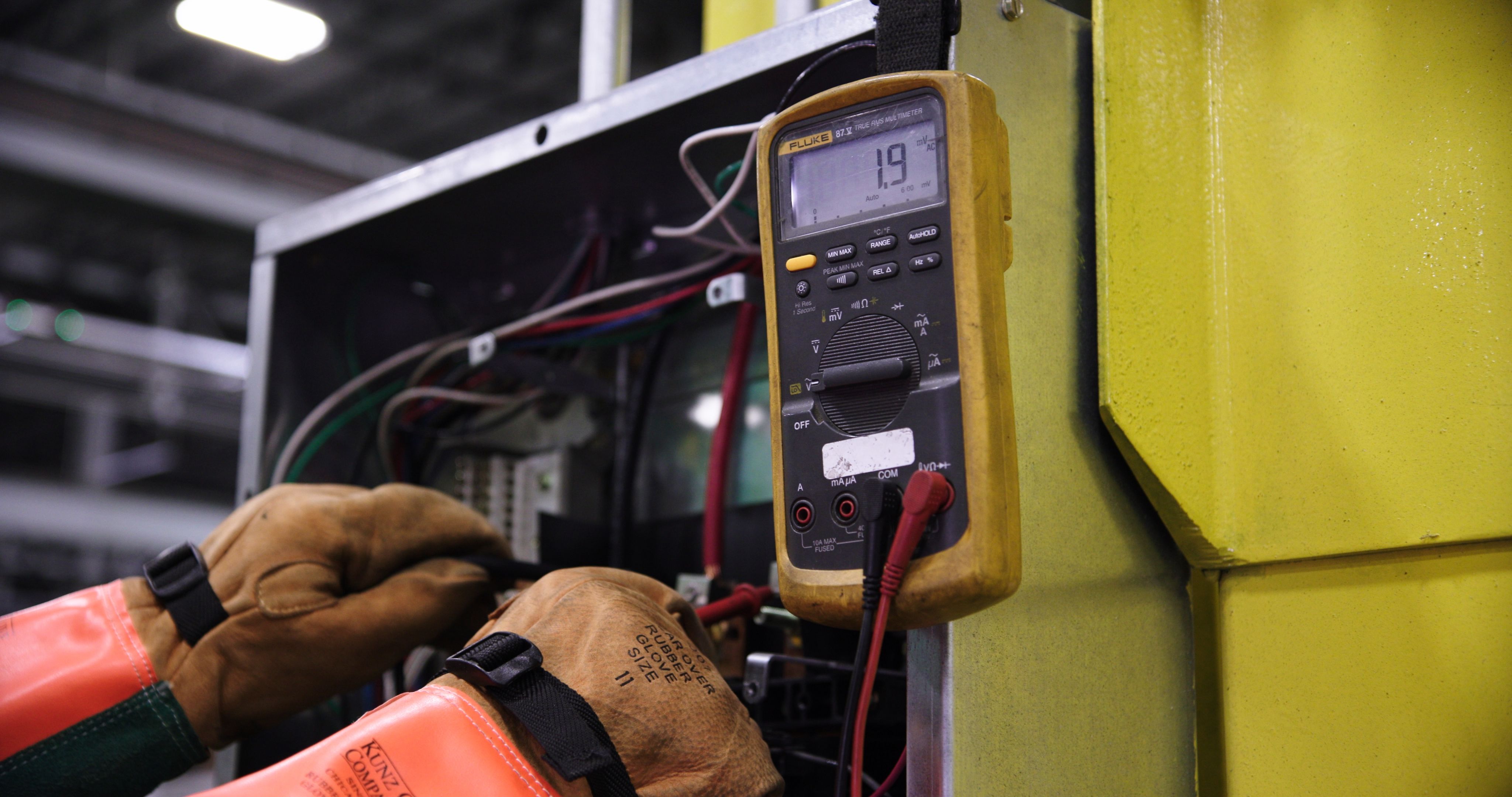
Full Outpatient Cover
At the more comprehensive end of the market, a policy may provide full eligible outpatient cover. Subject to the policy terms, this can mean eligible specialist consultations, diagnostic tests and scans are covered without a relatively low annual monetary outpatient limit. For someone wanting comprehensive access from initial symptoms through diagnosis and into eligible treatment, this can provide valuable certainty. It will generally cost more than selecting a restricted outpatient option.
Limited Consultations With Diagnostics Covered Separately
Some insurers structure their policies differently. They may place a limit on specialist consultations while providing broader or separate cover for eligible diagnostic tests and scans. This can sometimes provide an attractive middle ground. Why? Because a complicated diagnosis can involve significantly more than one consultant appointment. The investigations required to establish what is wrong can sometimes be the expensive part of the journey.
Monetary Outpatient Limits
Another common approach is an annual monetary allowance. Depending on the insurer, you might select an outpatient limit such as £500, £750 or £1,000. Eligible consultations and certain tests are then paid from that allowance. Some policies treat higher-cost diagnostic scans such as MRI, CT or PET scans separately, while others structure their benefits differently. This is precisely why two policies with the same headline outpatient limit are not necessarily equivalent.
A £1,000 Outpatient Limit Can Disappear Faster Than You Think
Consider a real-world type of scenario.
Someone has held private medical insurance for several years and never needed to claim.
They then develop a medical problem that is not straightforward to diagnose.
They require two specialist consultations, blood tests, an X-ray and an ultrasound.
The overall diagnostic journey costs around £2,600.
If their policy has a £1,000 combined outpatient allowance and those costs fall within that allowance, the remaining eligible costs could become their responsibility once the limit has been exhausted.
It is also important to understand that this outpatient limit applies per policy year. Once that £1,000 allowance has been used up on one condition, it is gone for the remainder of that year. If a completely separate medical problem then arises during the same policy year, there would be no outpatient cover left to fund the diagnosis. The cost of specialist consultations and tests for that second condition would fall to you to self-fund.
For a self-employed tradesperson, that could mean paying out of pocket for a diagnosis at the very point you need answers most.
Specialist blood investigations can sometimes be particularly expensive depending on what is being investigated.
This illustrates an important point.
The cheapest outpatient option is not automatically the best-value outpatient option.
A policy where diagnostics are treated separately from a consultation allowance may be more suitable for some customers than a single monetary pot.
Equally, somebody primarily concerned with keeping their monthly premium down may prefer a restricted level of outpatient cover.
There is no universally correct answer. It depends on what you want the policy to do.
That is where regulated advice can add genuine value.
Hospital Choice: Does It Matter?
Another major factor is the hospital and consultant access provided by the policy.
Most insurers offer a nationwide hospital network that can include major private hospital groups such as Spire Healthcare, Nuffield Health and Circle Health Group, subject to the insurer's particular network.
Some policies also provide access to additional London hospitals and specialists.
Then there are guided options.
What Is a Guided Hospital or Consultant Option?
Guided options are designed to reduce the cost of cover by limiting how the customer selects their specialist. Different insurers use different names for these arrangements.
Rather than having unrestricted choice from the insurer's wider eligible network, the insurer may provide a shortlist of suitable specialists based on the condition and location.
For somebody who simply wants an appropriate specialist and is not concerned about exactly who treats them, this can be an effective way of keeping the premium lower in cost.
But there is a trade-off.
Imagine you've injured your hip and researched a particular orthopaedic consultant who specialises in exactly the problem you have. If that consultant is not available through your guided pathway, you may not be able to use them under that option.
Similarly, having a particular hospital on an insurer's wider network does not necessarily mean you will always be directed there under a guided consultant arrangement.
This is why hospital access should not be viewed as nothing more than a list of hospital names.
The more useful question is: How much choice do you want when you actually need treatment?
Excesses: One of the Simplest Ways to Control Cost
An excess is the amount you agree to contribute towards eligible claims.
Generally, selecting a higher excess can reduce the monthly premium.
Insurers offer different excess options, ranging from no excess through to significantly higher amounts on some products.
The important detail is how frequently the excess applies.
Many policies apply the excess once per insured person per policy year. Others can structure it differently, including applying an excess per claim.
That distinction matters.
If your policy applies a £250 excess once per policy year and you make several eligible claims during that year, you may only pay the excess once.
A policy applying an excess differently could produce a very different outcome.
Never assume that two £250 excesses work in exactly the same way simply because the number is identical.
What About Physiotherapy and Other Therapies?
For someone doing a physically demanding job, therapies can be an important consideration.
Depending on the insurer and policy, eligible benefits may include treatment such as:
- Physiotherapy
- Osteopathy
- Chiropractic treatment
- Other recognised therapies
The amount of cover and how treatment is accessed varies between providers.
Some insurers include therapies as part of the overall outpatient allowance, meaning therapy costs share the same annual limit as consultations and diagnostics. Others offer therapies as a separate add-on benefit with its own limit.
Some insurers have pathways designed to get customers assessed quickly without necessarily requiring the traditional GP-to-consultant route first.
If back, joint or muscular problems could prevent you from working, this is an area worth comparing carefully.
Cancer Cover
Comprehensive cancer cover is another important part of private medical insurance.
The exact benefits vary between insurers, so customers should compare what is included rather than simply assuming every cancer benefit works identically.
Policies may differ in areas such as treatment, drugs, monitoring and other cancer-related benefits.
Again, the detail matters.
Optional Benefits
Depending on the insurer, additional options may also be available.
These can include dental and optical cashback, enhanced mental health benefits, travel cover and other health and wellbeing services.
Dental cashback, for example, may provide an annual allowance towards eligible routine dental costs such as check-ups, hygienist appointments, X-rays and fillings.
Optical cashback may contribute towards eligible eye tests, glasses or contact lenses.
These extras can be useful.
But we would generally recommend getting the core medical cover right first.
A generous optical allowance is little consolation if the underlying medical policy does not provide the level of diagnostic or hospital access you expected.
What About Pre-Existing Medical Conditions?
This is one of the most important things to understand before buying private health insurance.
Private medical insurance is generally designed to cover new eligible medical conditions rather than simply paying for everything that existed before the policy began.
How your previous medical history is treated depends on the underwriting method used.
Two common approaches are Moratorium Underwriting and Full Medical Underwriting. Learn more about underwriting here.
Under a moratorium, recent pre-existing conditions are generally excluded initially under the insurer's moratorium rules. Depending on the insurer, policy and medical history, some conditions may potentially become eligible again after the required symptom and treatment-free period.
With Full Medical Underwriting, you provide medical information when applying and the insurer confirms any specific exclusions applied to your policy.
Depending on how your cover is arranged, some policies may also be available on a medical history disregarded basis.
The correct approach depends on your circumstances.
Do not assume that selecting the cheapest policy means selecting the most appropriate underwriting.
Can I Get Private Health Insurance If I Already Have an Injury?
Potentially, yes, but this needs explaining carefully.
Having an existing medical problem does not necessarily prevent you from buying private health insurance.
However, you should not assume the policy will pay for treatment of the condition you already have.
That condition may be excluded depending on the underwriting method and insurer.
The policy may still provide valuable protection against eligible new medical conditions arising in the future.
If you're already experiencing symptoms, receiving treatment, awaiting investigations or sitting on an NHS waiting list, make sure you explain the situation fully when speaking to an adviser.
Private Health Insurance and Income Protection Do Different Jobs
These two products are often confused. They solve different problems.
Private health insurance is designed to provide access to eligible private medical diagnosis and treatment.
Income protection is designed to provide a proportion of your income if illness or injury prevents you from working and the terms of the policy are met.
Think about the difference this way.
If a shoulder injury prevents you from working, private health insurance may help you access eligible diagnosis and treatment.
Income protection may provide financial support during a qualifying period when you're unable to work.
For a self-employed tradesperson, both risks can be important.
Whether either product, or a combination of the two, is appropriate depends on your individual circumstances, budget and existing protection. Other forms of protection such as life insurance and critical illness cover may also be worth considering alongside health insurance and income protection.
An FCA-regulated adviser can assess those circumstances and make an appropriate recommendation.
Sole Trader or Limited Company: Does It Matter?
Yes.
How you arrange private medical insurance can differ depending on how your business is structured.
A sole trader will generally arrange individual private medical insurance personally.
A director operating through a limited company may have the option of arranging business health insurance through the company.
Employer-paid private medical insurance is generally treated as a taxable benefit in kind for the employee or director, and there can also be tax considerations for the business.
Tax treatment depends on individual circumstances and can change, so speak to an accountant or tax professional if you're unsure.
Do not choose a business-funded policy simply because somebody told you it is 'tax deductible'.
The overall tax position needs to be considered properly.
Health Insurance by Trade
Health Insurance for Builders
Building work can involve lifting, climbing, repetitive movement and long periods of physical activity. Problems affecting your back, shoulders, knees or joints can have an immediate impact on your ability to work. When comparing private health insurance for builders, consider outpatient diagnostics, therapies and hospital access alongside the headline premium.
Health Insurance for Plumbers
Plumbing can be particularly demanding on knees, backs and shoulders, with work frequently carried out in awkward or confined spaces. Access to eligible musculoskeletal assessment, diagnostics and treatment may therefore be particularly important when comparing policies.
Health Insurance for Electricians
Electricians rely heavily on mobility, dexterity and the ability to work safely. A problem affecting a hand, wrist, shoulder or back may make some types of electrical work impossible even if the same condition would not prevent somebody from performing an office job. The level of outpatient and diagnostic cover deserves particular attention.
Health Insurance for Carpenters and Joiners
Hands, wrists, elbows, shoulders and backs are fundamental to carpentry and joinery. When your livelihood relies on physical capability, understanding how a policy deals with consultations, diagnostics and therapies can be just as important as understanding hospital treatment.
Health Insurance for Contractors
Contractors can face another challenge. Being unable to fulfil a contract can affect more than the income lost during the immediate absence. It can affect future work, client relationships and contract renewals. Private health insurance cannot eliminate that commercial risk, but faster access to eligible private healthcare may help reduce the disruption caused by waiting for diagnosis or treatment.
How Much Does Private Health Insurance for a Tradesman Cost?
There is no single meaningful price.
The premium can depend on factors including:
- Your age
- Where you live
- The insurer
- The level of outpatient cover
- Hospital and consultant access
- Your chosen excess
- Optional benefits
- Who else is included on the policy
- The type of policy and underwriting selected
This is why generic statements such as 'health insurance costs £50 a month' can be misleading.
A stripped-back policy and a comprehensive policy can both be called private health insurance while providing very different benefits.
A better question is: What level of cover can I get for the budget I'm comfortable spending?
Is Private Health Insurance Worth It for a Self-Employed Tradesman?
There is no universal answer.
Some people have substantial savings, alternative income or business arrangements that allow them to absorb a prolonged period away from work. Others cannot.
The important thing is understanding the risk.
Ask yourself:
If I couldn't physically do my job for three months, what would happen?
- Would your savings comfortably cover your household expenses?
- Would your business overheads still be manageable?
- Would existing customers wait?
- Could somebody else fulfil your contracts?
- How would six months away from your trade affect the business?
Then compare that risk with the cost and benefits of appropriate protection.
For a broader look at this question, read our guide on whether private health insurance is worth it.
That creates a far more meaningful conversation than simply asking:
'What's the cheapest health insurance?'
Why Choose Elective Health?
When your ability to earn depends on your ability to work, choosing private health insurance deserves more thought than simply finding the lowest monthly premium.
The difference between policies can be substantial.
Outpatient limits, diagnostic cover, hospital access, consultant choice, excesses, therapies and underwriting can all affect how useful your cover is when you actually need it.
At Elective Health, our FCA-regulated advisers can compare suitable options and explain the differences in plain English.
Whether you're a builder, plumber, electrician, carpenter, contractor or another self-employed professional, we'll take the time to understand what matters to you before recommending appropriate cover.
- Independent whole-of-market comparison
- Free expert advice. No cost, no obligation
- Deal directly with Kingsley and Louis. No call centres
- 5.0 stars on Google from 46 independent reviews
- Ongoing support from initial setup through to renewal
- Specialists in personal, family and business cover
Health Insurance Resource Hub
Expert guides to help you navigate private healthcare.
What Our Clients Say
Don't just take our word for it. Here's what our clients have to say about their experience.
Frequently Asked Questions
Speak to Elective Health today
Find out what private health insurance could look like for you.
Get in Touch